
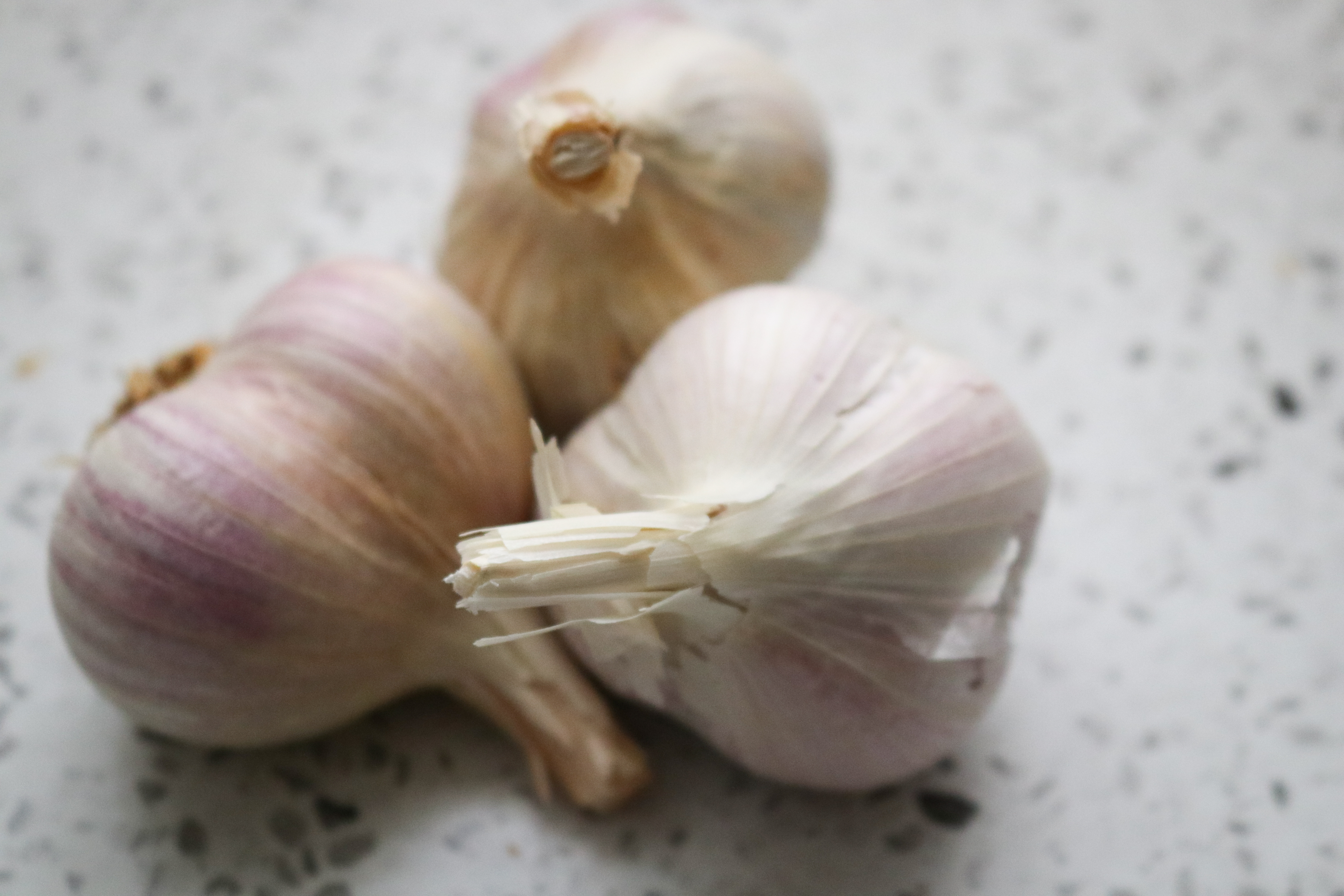

Why plant garlic?
Garlic (Allium sativum) is an incredibly common ingredient in meals from cultures the world over. It is also readily available at the grocery store, supermarket, farmer’s market, corner store, co-op, bodega, convenience store, and anywhere else you might purchase food, and it is typically very affordable. So why bother to grow your own?
That’s a fair question. In addition to the old standby reasons for anyone to grow anything—control over the quality, source, and production of your food—garlic in particular is a fantastic grow-your-own option because it is so easy. In fact, it is usually the first thing I suggest when I talk to folks about wanting to start growing their own food. It is dead simple to grow and makes for a really great introduction to gardening. Garlic is low effort and high yield, perfect for any garden, but especially a beginner. Plant in the fall, basically ignore it until spring, and enjoy the harvest in early summer. What’s not to love?
There are five elements: earth, air, fire, water, and garlic
Louis- Diat
Where & when to plant
Garlic grows best in full-sun and loose sandy soil. However, it is a hardy plant and can tolerate a variety of conditions. For example: my native soil is clay dominant and easily becomes compacted, but I’ve never had trouble growing garlic (or onions, or potatoes, or any other root crops). If you are worried about your soil condition, consider soil amendments, or opt to grow in raised beds or containers.
Garlic is typically planted in the fall, a few weeks before the ground freezes. Planting is dependent on your location, but for most folks in North America, October is a good baseline since temperatures have dropped, but not yet reached freezing. If you live way north, or in a particularly cold climate you may plant as early as September, in the south you could delay to November or as late as December.
Since garlic grows from cloves, which are essentially a bulb, it is planted while dormant and remains that way through the winter. Then, when the soil warms in the spring, it comes out of dormancy and begins to grow. Garlic needs a period of cold in order to develop properly. If you live in a warmer climate, you can employ your refrigerator to artificially simulate those conditions.
Planting guide by zone

You can find your hardiness zone here: USDA Plant Hardiness Zone Map. Enter your U.S. zip code in the interactive tool to find your USDA hardiness zone. The map is based on the average annual minimum winter temperature in a given area. Planting zones are meant to help gardeners determine which plants will survive winter in a given area. They are a reference, a guideline, not an absolute. Soil, moisture, humidity, heat, wind, and other conditions also affect the viability of plants.
You may find that your own experience contradicts the map. If that is the case, you may live in a microclimate. Trust your experience. For example, the map says I live in zone 6b, but I also know that my yard often doesn’t get frost as early as some of my friends in the same zip code. Because of the microclimate of my specific location, I can sometimes push planting dates.
Zones 3-5: plant garlic in late September to early October. Hardneck garlic will grow best in these colder zones
Zones 5-7: plant garlic in mid to late October
Zones 7-9: plant garlic late October into November
Zones 9-10: plant garlic late October through December. Softneck garlic will grow best in these warmer zones.
You may notice that there is some overlap here. That’s because neither grow zones nor planting are an exact science. We want the bulbs in the ground before the ground freezes, but the timing for that varies quite a bit even within the same grow zone. Use your best judgement. As long as it is not too hot or too cold, you’ll be fine planting a bit “early” or a bit “late.” I live in zone 6b and typically plant on or near Halloween. My neighbor planted about 3 weeks later, and we both harvested in June. However, if we had a freeze before they had planted, my neighbor would likely have had some trouble.
Seed garlic
Calling it seed garlic is something of a misnomer, since garlic is not typically grown from seed. Instead, it is grown clonally. No, we’re not going talking about test-tube produce, I promise. All that means is that each head of garlic is grown from a clove of garlic, so it is essentially a clone of the existing clove. When we talk about seed garlic, we are talking about the heads or cloves of garlic that will be planted to grow more garlic. Seed garlic is widely available at nurseries and garden centers, but I’ve never seen it at a big box store. Garlic can also be purchased from seed suppliers online. I get mine from a company called Garlic Gods which is local(ish) to me and has proven to be an incredibly reliable source of seed garlic. I love that each shipment is inspected and certified as white rot free. If you live in Idaho
Garlic is a member of the allium family (along with onions and leeks) and thus susceptible to a disease called white rot. White rot is an aggressive fungal infection that spreads easily and can survive in the soil for a lengthy period of time. For this reason, it is incredibly important to get your seed garlic from a reputable source. You should choose seed garlic that has been certified free from the disease so as to avoid spreading it to your soil and infecting any other plants in your garden.
Hardneck vs softneck varieties
Garlic is available in two varieties, hardneck & softneck. The “neck” refers to the stalk which grows out of the ground.

Hardneck garlic has a stalk or scape that grows from the center of the bulb and turns rigid at maturity. Hardneck varieties are very winter hardy and tend to grow best in colder climates. These varieties thrive in zones 3-7, tolerate zone 8, and don’t grow as well in the warmer climates of zone 9-10. Hardneck garlics grow fewer, but larger cloves per head. However, these varieties have a shorter shelf life, typically storing between 4 and 6 months.

Softneck garlic does not produce a scape, instead the stalk is made up entirely of leaves which remain soft and flexible. These varieties are adaptable and grow well in zones 6-10, but may require mulch in colder areas. If properly cured, softnecks will store very well, lasting 9-12 months under the right conditions. There are more cloves in each bulb, and clove size varies.

Choose a variety that makes the most sense for you and your growing conditions. I grow a mix of both, which I can do as I live in zone 7 and both varieties grow well here. You may be able to grow a mix, or you might need to choose one or the other. Just keep in mind that neither is inherently better or worse than the other, so whichever works for you, works for you.
Planting
Since garlic is a root crop, the bulb needs space to grow, so remove any rocks, stones, or other impediments as you prepare your beds. Break the garlic into individual cloves, but leave the protective skin on.
Plant the cloves pointed end up about 4-6 inches apart. Remember that each of those cloves will form a head of garlic so they need enough space to do so. I use my hand as a rough spacing guide and plant my garlic about a hand’s width apart. Larger cloves tend to produce larger bulbs, so keep that in mind as you plant. You can always reserve the small cloves for eating. Cover with soil and you’re good to go.

If you live in a particularly cold area, consider mulching your garlic beds with straw or leaves to insulate and protect your bulbs through the winter.
Growing
Garlic will remain dormant if left undisturbed through the winter. There is no need to water, weed, or fertilize, especially if you have mulched the beds.
In spring, when the soil starts to warm, remove the mulch and spread some compost on the bed. Don’t water unless the ground gets very dry. Garlic does not like wet feet and will rot if overwatered. Once the plants are up, water occasionally and keep weeds under control to give your garlic the best chance of success.
Alliums are naturally pest resistant as their strong smell tends to repel bothersome animals and insects. Aside from occasional watering and weed control, you can largely neglect your garlic and just let it grow.
If your garlic sends up scapes or begins to form flowers, cut them back with scissors or garden shears to direct energy back into the bulb. Remember that the flower is the reproductive part of the plant, and the ultimate goal for anything in nature is to reproduce. If given the opportunity, your garlic will spend all of its energy on reproduction and none of it on growth. Don’t give it the opportunity! Garlic scapes are edible and boast a delicate garlic flavor. They make a lovely addition to a variety of recipes. My personal favorite way to use them is garlic scape pesto.
Harvesting and storing
Garlic is harvested in summer when the weather turns hot. Your garlic will show you it is ready for harvest when the bottom two or three leaves have turned yellow, or when the tops fall over. Yellowing leaves DO NOT mean the plant needs more water!
Harvest from below the bulb with a broadfork or a trowel. Loosen the soil around the bulb, then gently pull the bulb from the top with your hand while pushing from the bottom with the garden tool. Always use a garden tool to apply pressure from below while pulling from the top, otherwise you can break off the leaves prematurely. We want the bulb and neck to remain intact while the garlic cures.
The key to long storage is curing. Curing is the process by which the moisture from the leaves transfers into the bulb, and the surface moisture evaporates. This allows the heads of garlic to form the protective skins and papery wrappers they need to store safely over a long period of time. Lay your garlic in a single layer someplace warm and well ventilated. Curing can take between 10 and 14 days, depending on the size of the bulb and the curing conditions. You will know your garlic is ready for storage when the skins are dry and the necks are tight. Remove the roots and tops before storing in a cool, dry place.
